JAPANESE
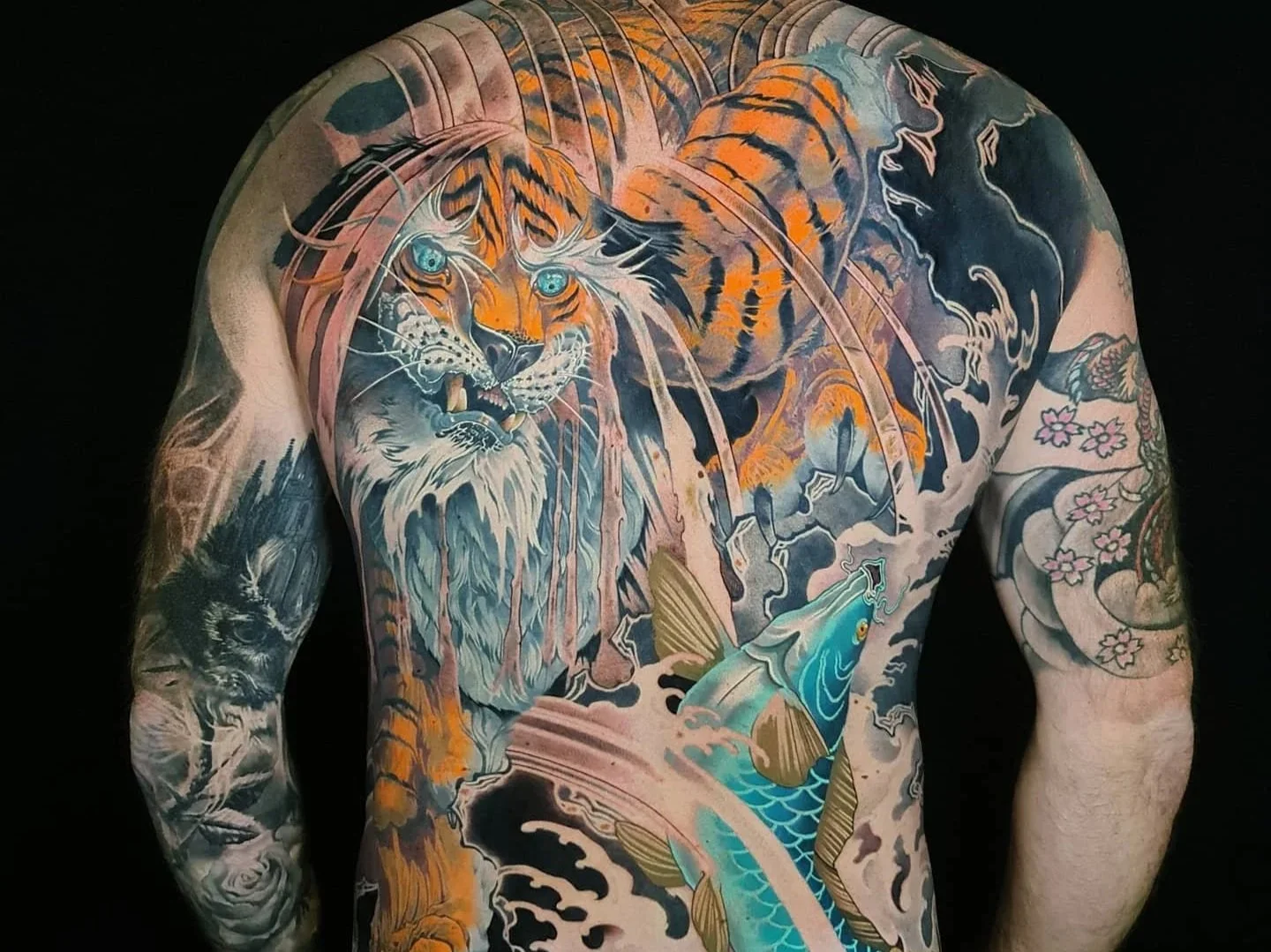
What is Japanese tattooing?
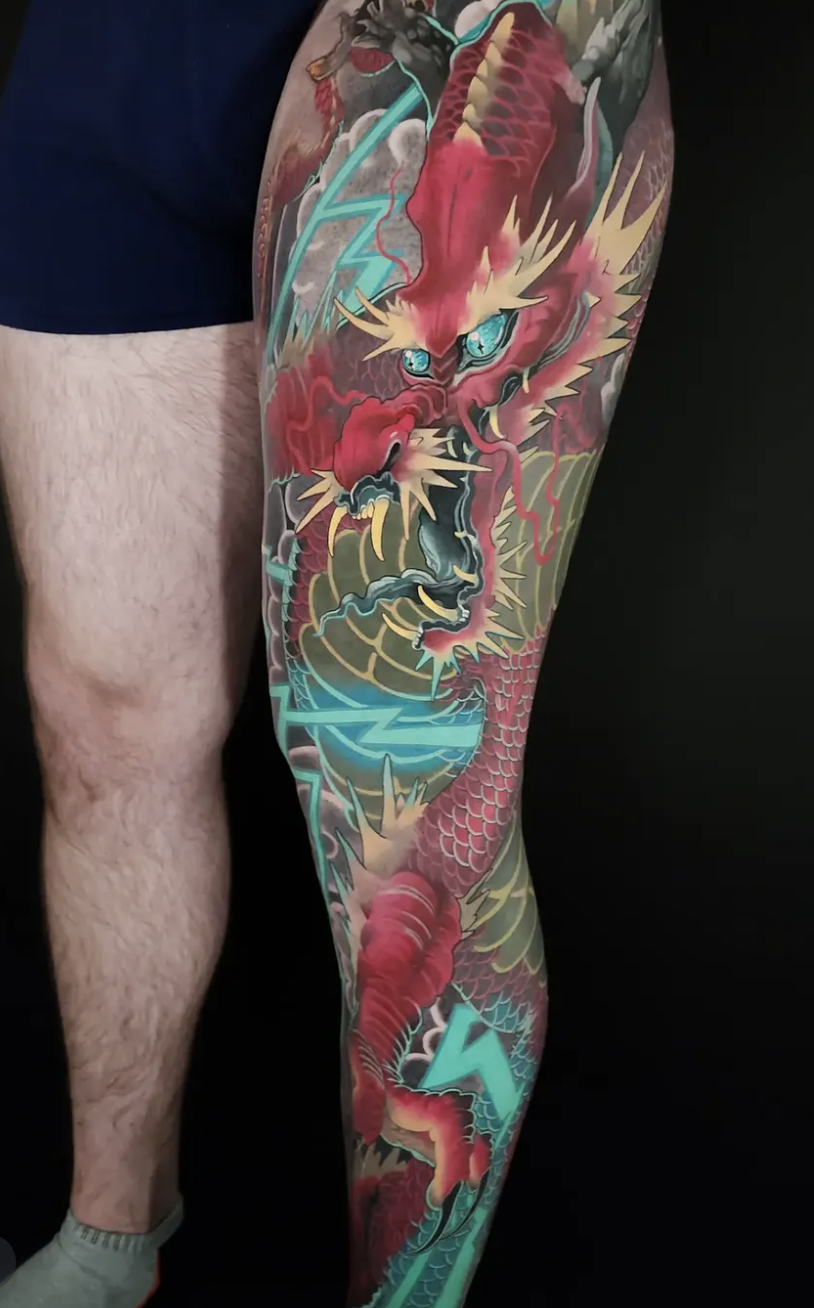
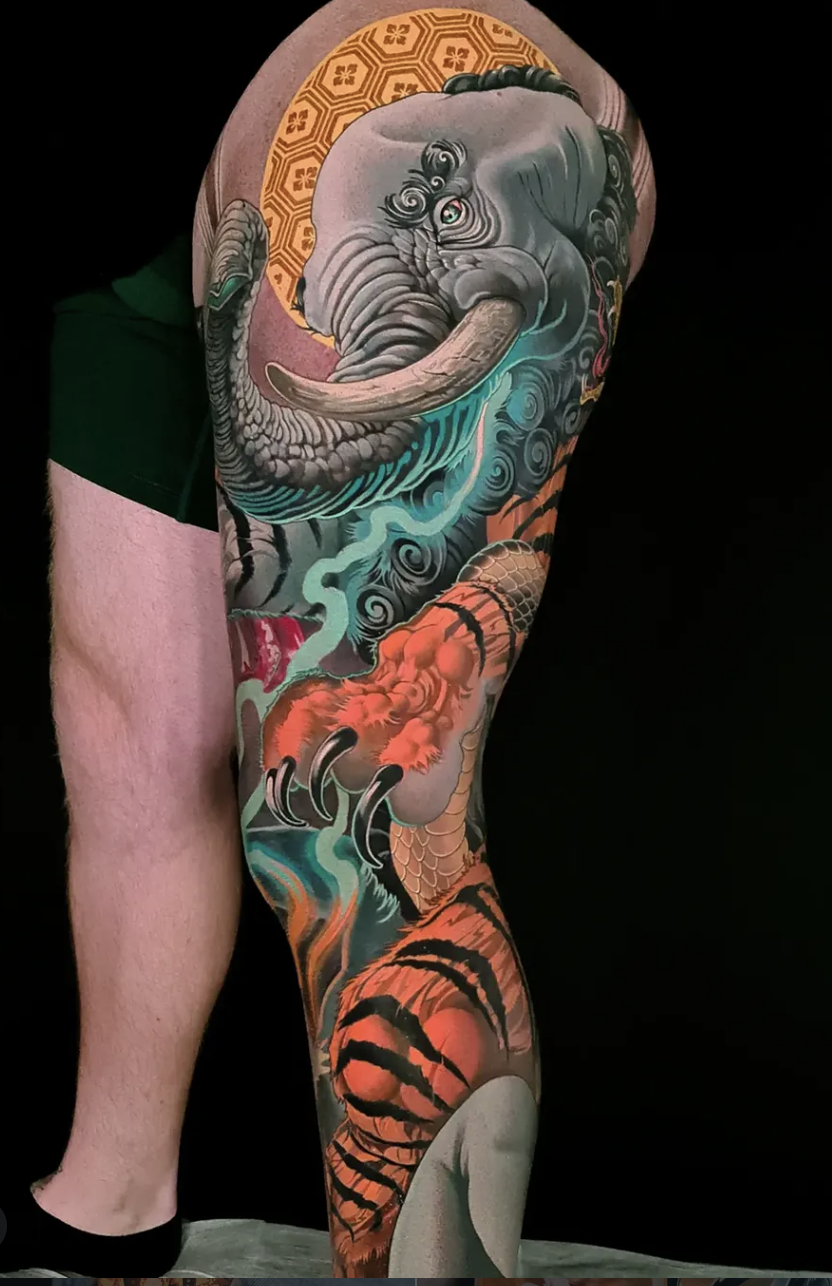
The history of Japanese tattooing traces back centuries, and is known for large flowing compositions that work with the shape and flow of the body (often large scale back-pieces or sleeves) to create movement and tell a story, usually depicting themes of protection, prosperity and courage.
It exists today in 2 distinct forms - traditional Japanese tattooing (Irezumi) which is created via a ‘hand poke’ method (Tebori) using hand tools, whereas modern Japanese tattooing generally uses tattoo machines.
Traditional Japanese tattoo tends to use a more limited but impactful colour palette, often built around reds, greens, golds and black. Designs are stylised rather than realistic, focusing on readability, flow and impact from a distance. Bold outlines, strong black shading and fluid backgrounds.
Modern or ‘neo-japanese’ tattoo is a contemporary take on the traditional style, featuring wider colour palettes and gradients, and more diverse application techniques, resulting in more vibrancy and intricate design details.
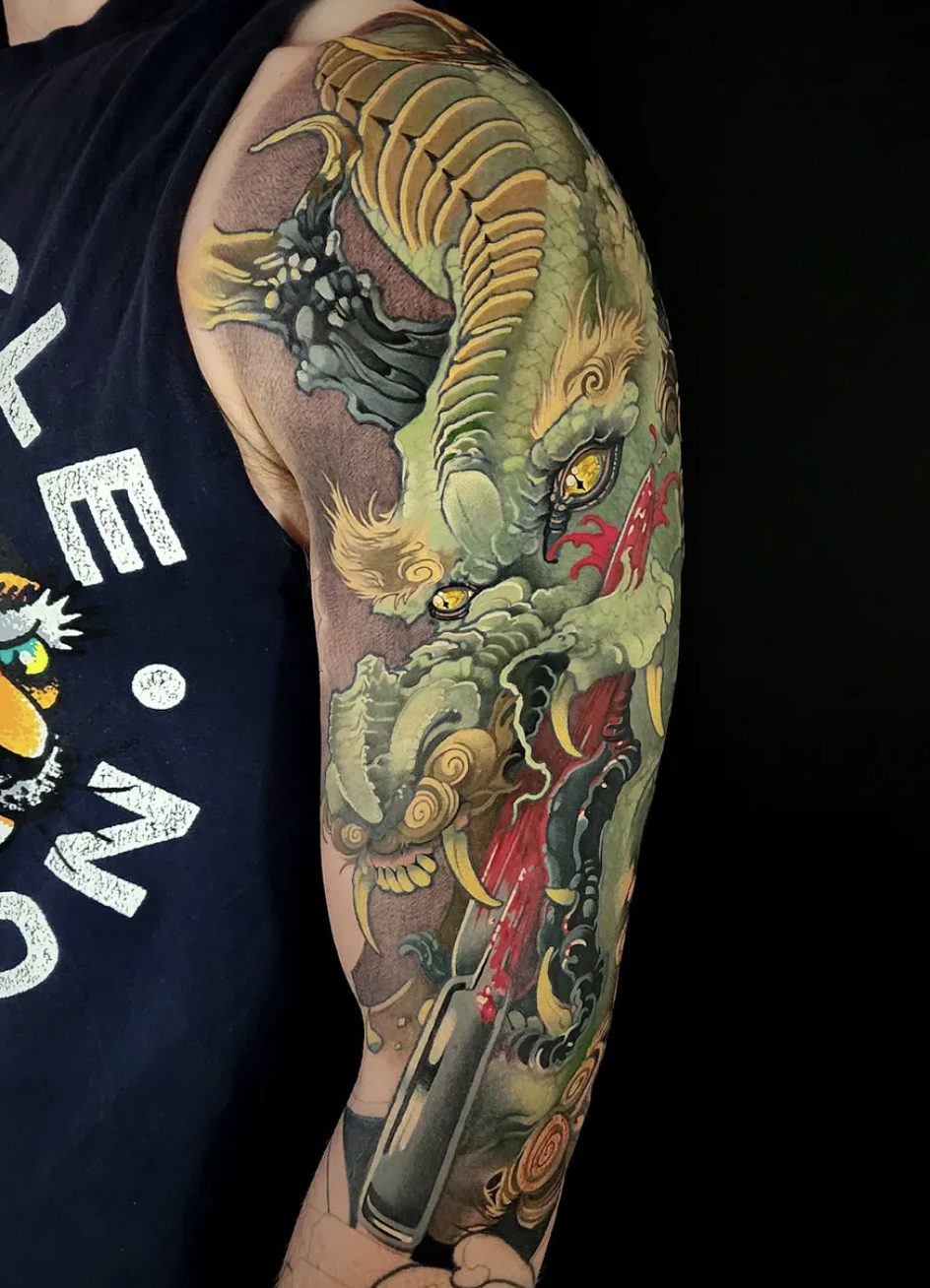
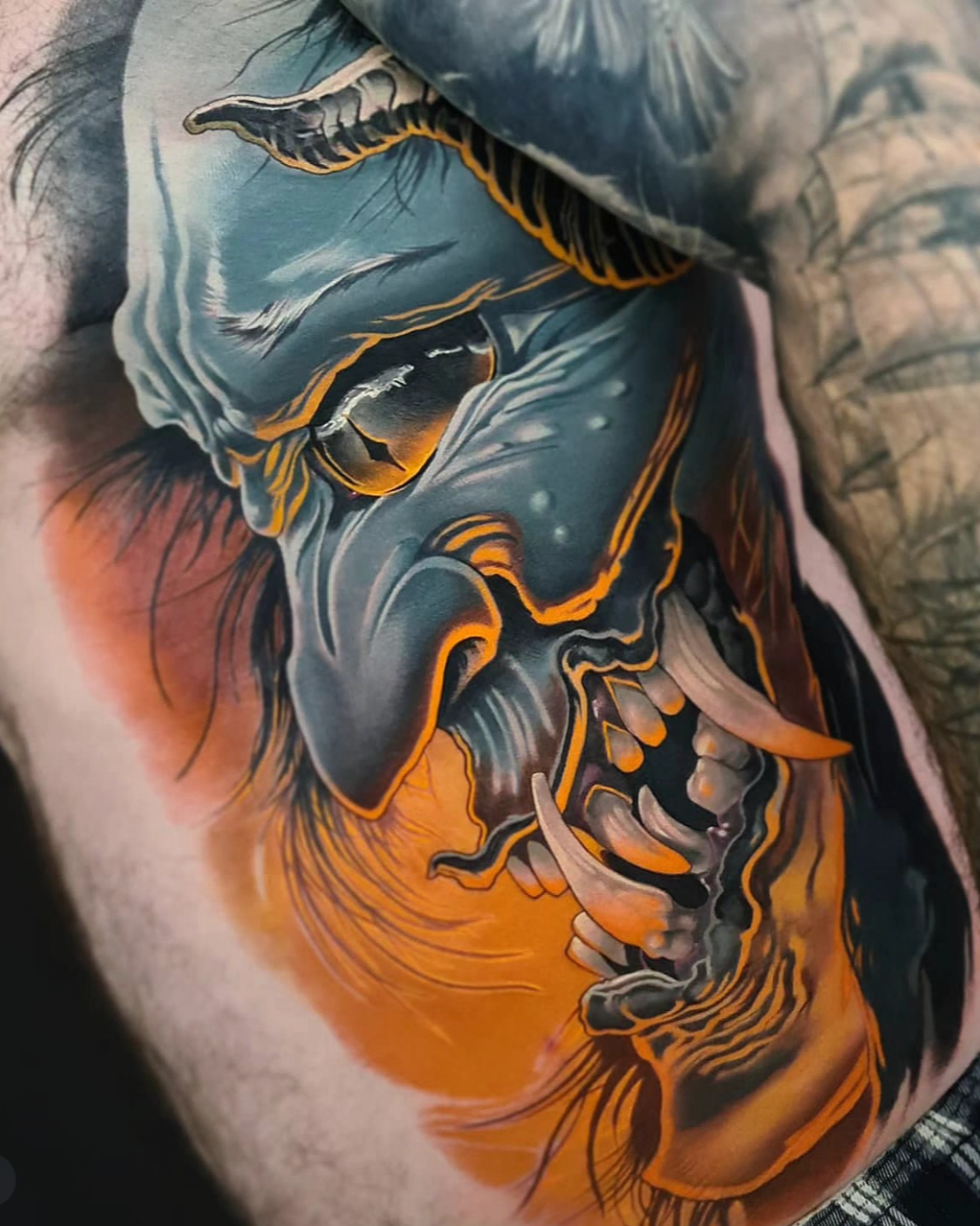
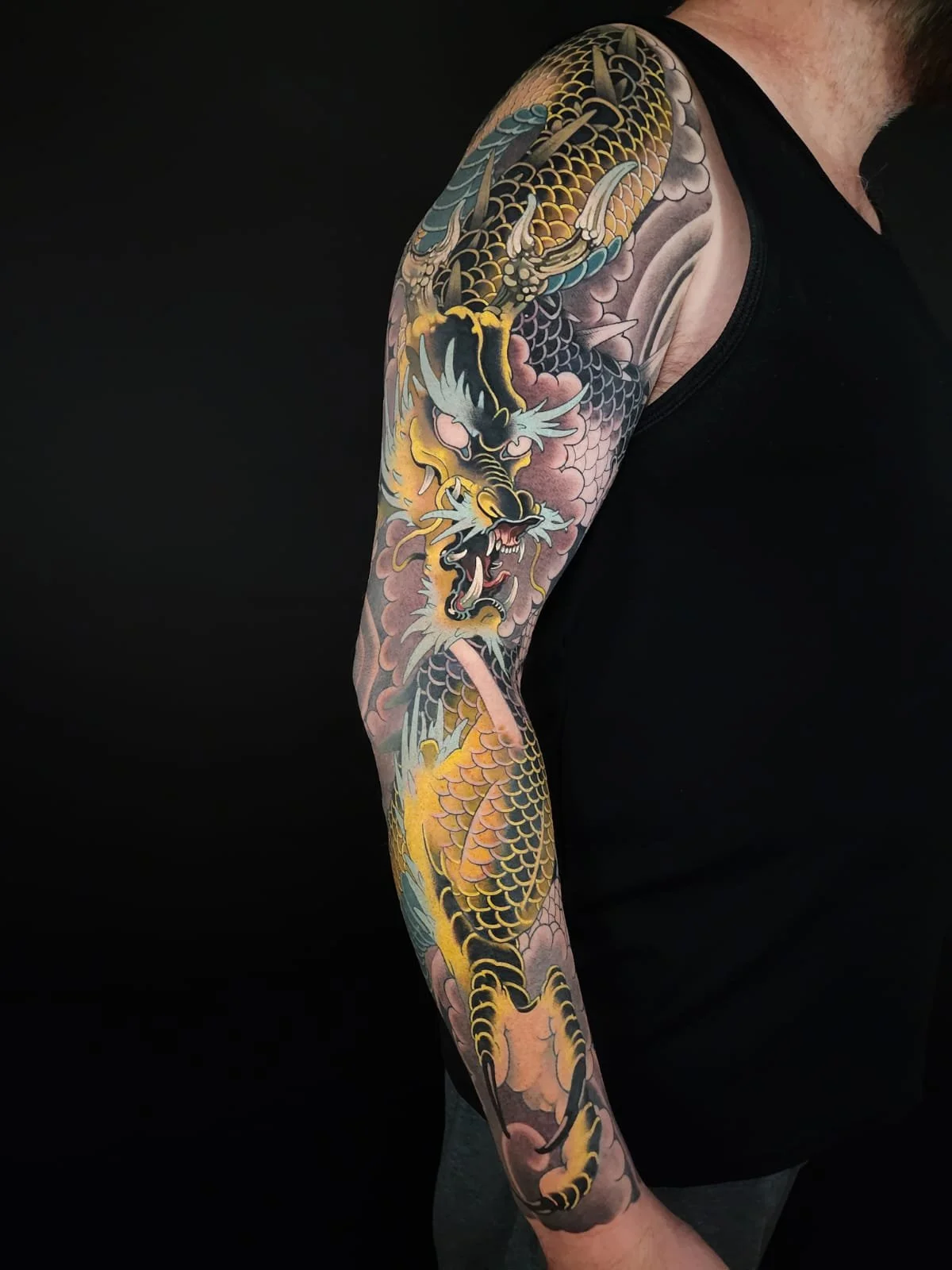
Ideas and inspiration for Japanese tattoos
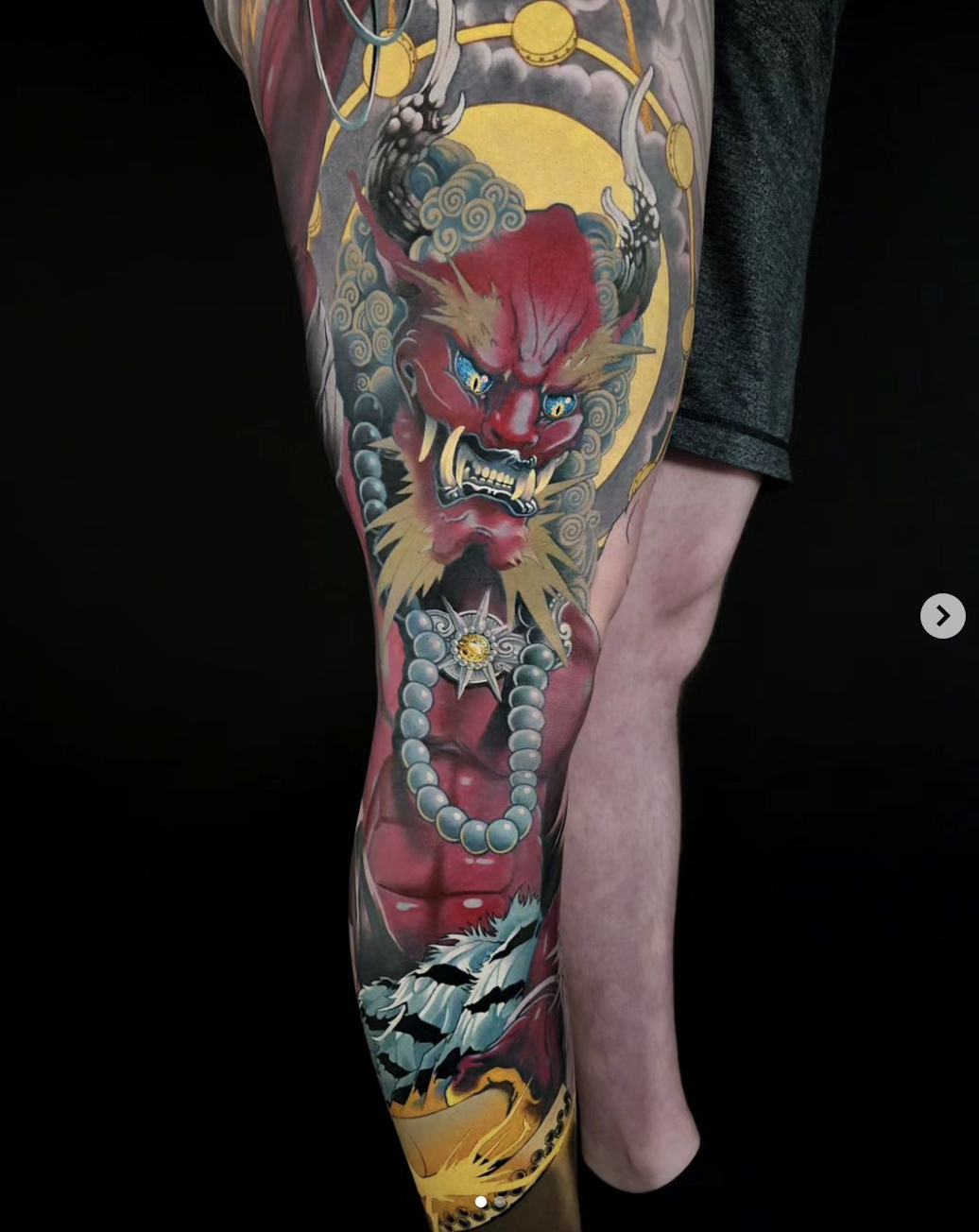
Common subject matter include dragons, koi fish, samurai, geisha, tigers, snakes, oni masks, cherry blossoms, peonies, waves, clouds and wind bars, as well as deities and hero figures.
These elements are usually combined to create a narrative as the style is heavily inspired by Ukiyo-e woodblock prints, folklore and mythology.
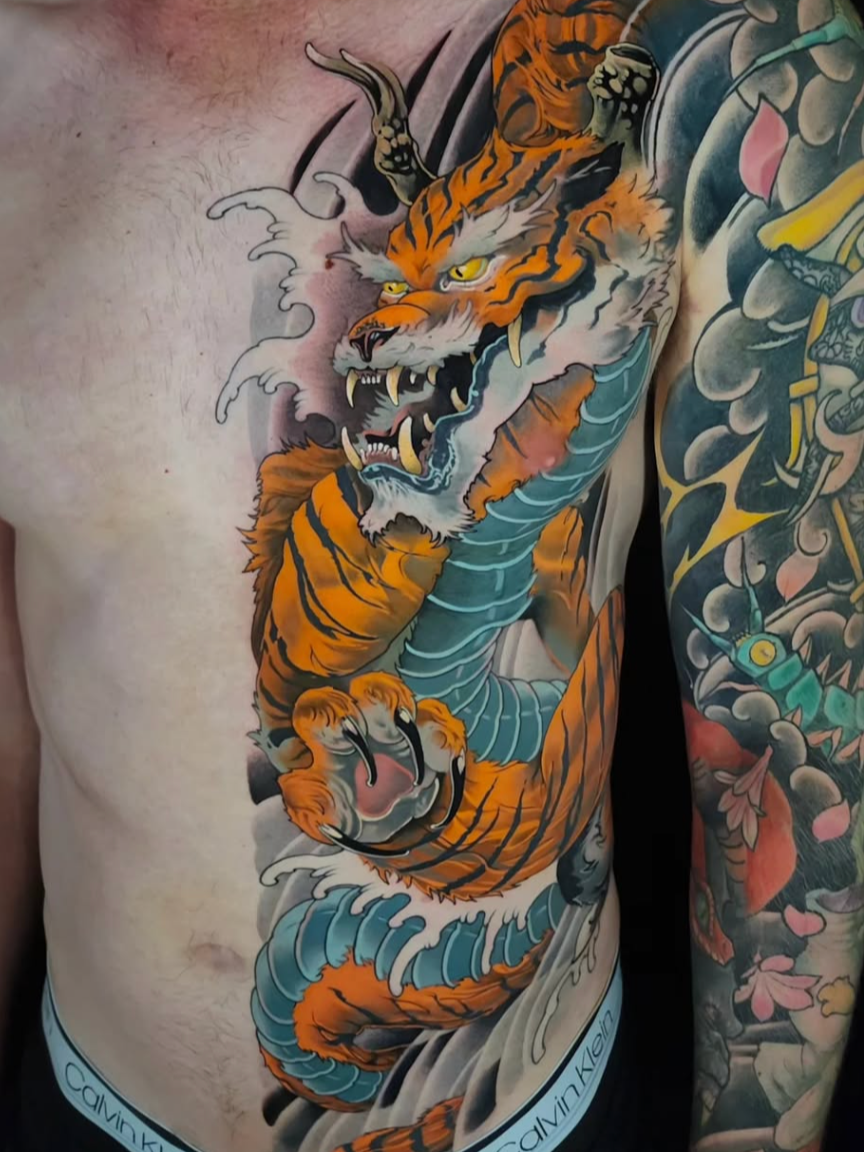
Artists we’d recommend for Japanese tattoos:
Nick Noonan